Knowledgeable. Thorough. Resourceful.
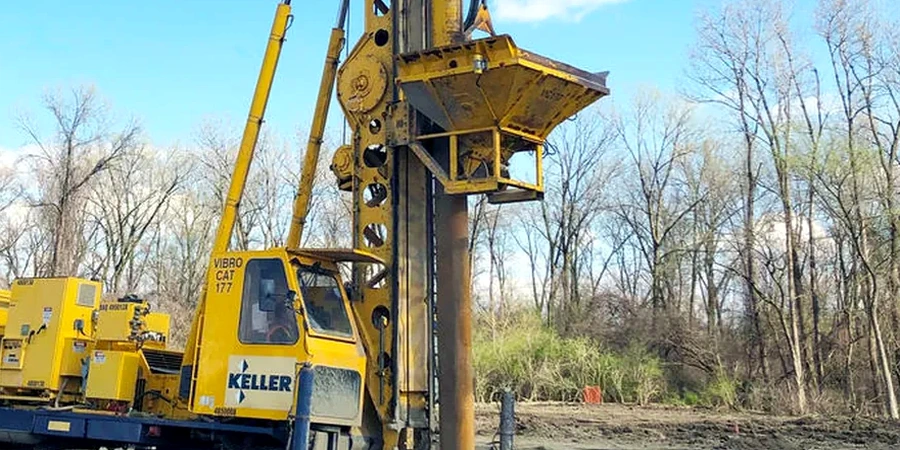
LEARN MOREGround improvement in Blenheim addresses a critical geotechnical challenge: constructing safely on the deep, soft alluvial soils that dominate the Wairau Plains. This category encompasses a suite of engineering techniques designed to enhance the load-bearing capacity, reduce settlement, and mitigate liquefaction potential of marginal ground. From densification methods like vibrocompaction design to reinforcement solutions such as stone column design, these interventions transform otherwise unsuitable subgrades into competent foundations. For a region experiencing steady residential and viticultural infrastructure growth, mastering these techniques is not merely an option—it is a fundamental necessity for durable, code-compliant development.
Blenheim's geological setting is defined by its position atop the Wairau Graben, a deep sediment-filled basin. The near-surface materials typically consist of Holocene fluvial deposits: interbedded silts, sands, and organic clays with high groundwater tables often within 1 to 2 metres of the surface. These fine-grained soils are particularly susceptible to cyclic softening and liquefaction during the seismic events that characterise the Marlborough Fault System. Standard shallow foundations on such profiles frequently exceed tolerable settlement limits, demanding a rigorous ground improvement strategy to distribute loads to more competent strata or to densify the mass in situ.
Local practice is governed by the combined requirements of the New Zealand Building Code, particularly Clause B1 (Structure) and Clause B2 (Durability), and the geotechnical design standard NZS 4402 for soil testing. Crucially, the Ministry of Business, Innovation and Employment (MBIE) guidance on seismic risk, alongside the Marlborough District Council's District Plan, mandates site-specific liquefaction assessments. Any ground improvement design must demonstrate through validated calculation methods—typically finite element analysis or empirical correlations with cone penetration test (CPT) data—that post-treatment performance objectives for the Ultimate Limit State (ULS) and Serviceability Limit State (SLS) are met.
The types of projects requiring these services in Blenheim are diverse. The expanding residential subdivisions on the plains demand cost-effective stone column design to support house slabs and light structures over compressible layers. Large-scale commercial developments, such as winery processing facilities and logistics hubs near Renwick, often require deep vibrocompaction design to eliminate collapse potential in loose granular fills. Infrastructure projects, including bridge approaches along State Highway 1 and stopbank upgrades for the Wairau River flood protection scheme, rely on rigorous ground improvement to prevent differential settlement and maintain structural integrity under earthquake loading.
Key indicators include a high groundwater table, presence of soft clays or loose sands in geotechnical logs, and Cone Penetration Test (CPT) results showing low tip resistance or cyclic stress ratios below code requirements. Excessive predicted total and differential settlement under structural loads, along with a high Liquefaction Severity Index (LSI) during seismic analysis, are definitive triggers for intervention.
Seismicity dominates design through mandatory liquefaction assessments per MBIE guidelines. Techniques must mitigate pore pressure build-up and soil strength loss during an earthquake. The design must prove that post-treatment soils achieve the required Factor of Safety against liquefaction for the design earthquake, ensuring foundation stability and preventing excessive lateral spreading during a seismic event.
The process begins with a targeted site investigation using CPT and boreholes to characterise stratigraphy. Engineers then select a method—such as stone columns for reinforcement and drainage or vibrocompaction for densification—and model performance analytically. A detailed design specifies grid spacing, depth, and installation criteria, followed by field trials and post-treatment verification testing to validate design assumptions.
The Council regulates these works through the building consent process under the New Zealand Building Code. A Producer Statement (PS1) for design and a PS4 for construction review are typically required from a Chartered Professional Engineer (CPEng). The consent application must include a comprehensive geotechnical report demonstrating compliance with Clause B1, including post-improvement verification of soil parameters.