GEOTECHNICAL ENGINEERING1
BLENHEIM
HomeSeismicSeismic microzonation

Seismic Microzonation Studies in Blenheim: Ground Response for Smarter Development

Knowledgeable. Thorough. Resourceful.

LEARN MORE

NZS 1170.5:2004 sets the framework, but in Blenheim, site class can change within a hundred metres. The Wairau Plains gravels thin out toward the south, and pockets of alluvial silt and loose sand sit right under light industrial and residential subdivisions. We learned this the hard way on a project near Riverlands where three boreholes within a single lot gave Vs30 values from 180 m/s to 420 m/s. A desktop site class assignment would have missed that completely. Seismic microzonation here is not just a planning exercise—it’s the only way to avoid under-design in soft pockets and over-design on stiff gravel, both of which cost money. We combine MASW with microtremor arrays and targeted SPT boreholes to build a ground model that reflects what the 2016 Kaikōura shaking already showed us: Blenheim’s soils amplify differently, block by block.

In Blenheim, site class can flip from C to D in less than 80 metres; a single borehole doesn’t tell you that—a velocity map does.
Our service areas

How we work

On a typical Blenheim job, we roll out a 24-channel seismograph with 4.5 Hz geophones spaced at 2 to 4 metres, depending on the target depth. The active MASW spread runs 50 to 100 metres, and we supplement with passive microtremor arrays—three-component seismometers recording ambient noise for 20 to 30 minutes per station—to pull Vs profiles down to 50 or 60 metres where the impedance contrast matters most. The Wairau gravels are stiff and produce clean dispersion curves above 15 Hz; the softer silts and sands south of town roll off below 10 Hz and need longer wavelengths. We back-check every geophysical profile with at least one borehole or CPT to anchor the velocity model, because gravel velocity can vary 30% just with changes in packing and cementation. The output goes into Surfer or GIS as continuous rasters, not just point data.
Seismic Microzonation Studies in Blenheim: Ground Response for Smarter Development
Technical reference — Blenheim

Local considerations

A developer came to us after buying a large lot off Middle Renwick Road, planning a two-storey commercial building. The geotech report from the vendor classified the site as Class C based on one SPT borehole. When we ran two MASW lines, the southern third of the site hit Vs30 of 195 m/s—Class D, with a 30% higher spectral acceleration at short periods. The foundation design had to step from standard shallow footings to ground improvement across that zone. That single zoning difference saved the client from a future remediation that would have cost far more than the microzonation study. In Blenheim, where gravels pinch out unpredictably and the water table sits shallow in winter, a site-wide velocity map is cheap insurance against nasty surprises during construction.

Need a geotechnical assessment?

Reply within 24h.

Email: contact@geotechnical-engineering1.co

Applicable standards

NZS 1170.5:2004 Structural design actions – Earthquake actions, NZGS Module 1: Guideline for the identification, assessment and mitigation of liquefaction hazards, NZGS Module 4: Geotechnical investigation of sites for earthquake engineering purposes, NZS 4402 / D7400 (crosshole and downhole seismic testing), IANZ-accredited ISO 17025 laboratory testing

Technical data

ParameterTypical value
Primary geophysical methodActive MASW + passive microtremor (HVSR) arrays
Max investigation depth50–60 m (passive), 20–30 m (active MASW)
Vs30 range mapped in Blenheim180 m/s (Class D) to >500 m/s (Class B)
Calibration boreholes per siteMinimum 1 per distinct geophysical unit
Liquefaction analysis methodBoulanger-Idriss (2014), LPI and LSN mapping
Site classification standardNZS 1170.5:2004, NZGS Module 1
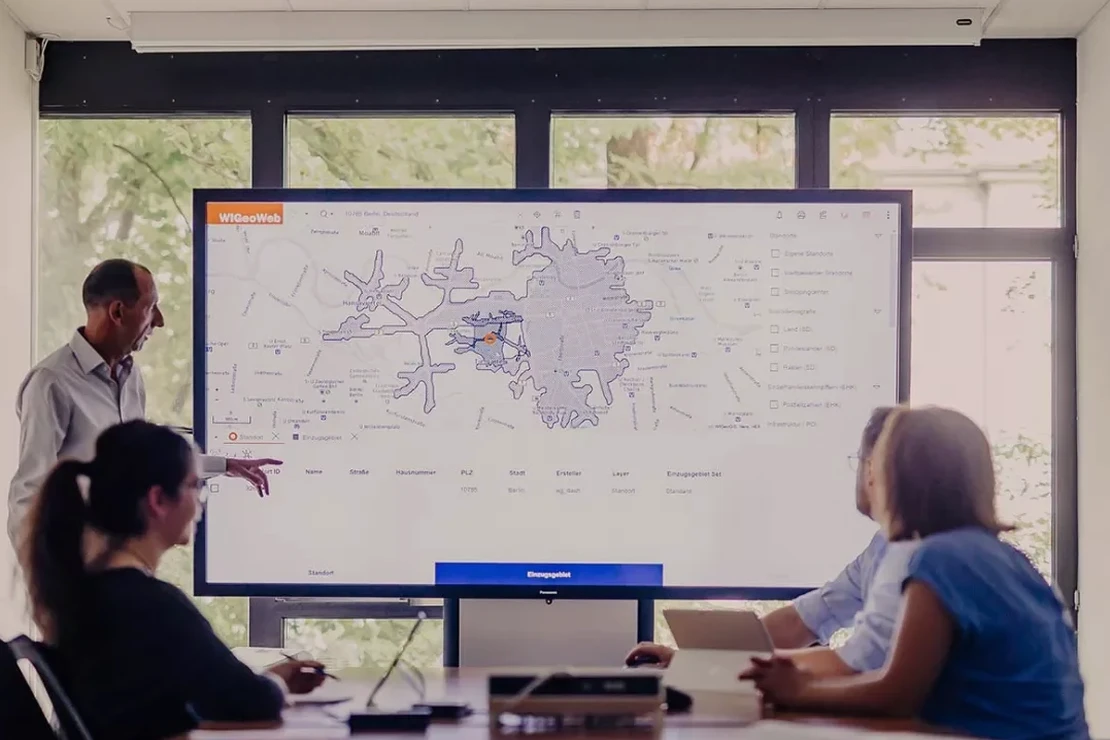
Output deliverablesGIS raster maps, design spectra, site class boundaries, hazard zonation

Quick answers

How much does a seismic microzonation study cost for a Blenheim site?
How many MASW lines or measurement points do I need on my site?

It depends on site size and geology variability. For a 5,000 m² lot in Blenheim with suspected lateral variation, we typically run two intersecting MASW lines plus three to five microtremor stations to capture the 2D velocity structure. If the gravel cover is uniform, fewer lines may suffice. Our team recommends a layout after reviewing existing borehole logs and the site’s position relative to mapped Wairau gravel boundaries.

Does the council require microzonation for a standard residential subdivision in Blenheim?

MDC and Environment Canterbury increasingly request site-specific seismic hazard assessments for subdivisions over a certain size, especially where NZS 1170.5 site class boundaries are uncertain or where liquefaction susceptibility is flagged in regional maps. A microzonation study provides the defensible data to satisfy consent conditions under the Marlborough Environment Plan, and it often speeds up the engineering review because the ground model is transparent and calibrated.

Location and service area

We serve projects across Blenheim and surrounding areas.

View larger map