GEOTECHNICAL ENGINEERING1
BLENHEIM
HomeFoundations

Foundations in Blenheim

Knowledgeable. Thorough. Resourceful.

LEARN MORE
Foundations in Blenheim

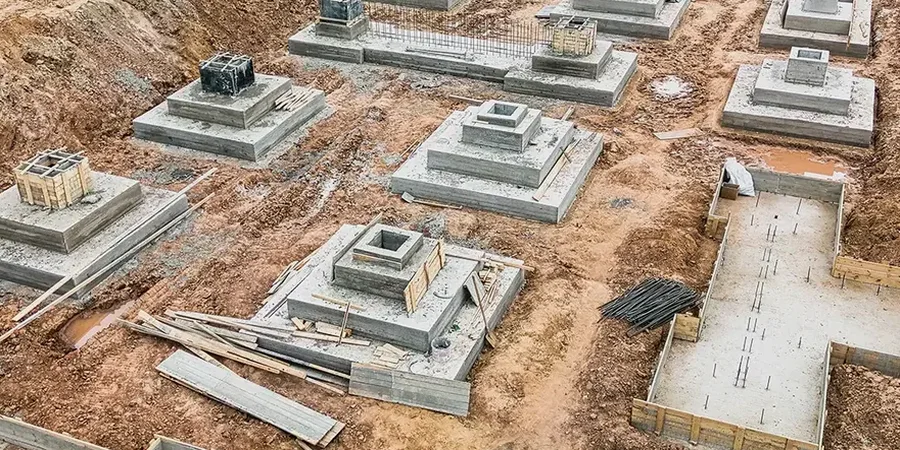
In Blenheim, foundation engineering must address the variable alluvium and silty soils of the Wairau Plain, where liquefaction potential and differential settlement are primary concerns under NZS 3604 and the Building Code’s B1/VM4 verification methods. A robust substructure often relies on deep pile foundation design to bypass compressible near-surface layers, transferring structural loads to denser gravels or suitable bearing strata identified through site-specific geotechnical investigation.

Residential builds on TC2 land, commercial developments in the central district, and viticulture structures with heavy tank loads all demand tailored solutions that go beyond standard shallow footings. Integrating driven or bored pile systems ensures compliance with local council consenting requirements while mitigating long-term ground movement risks in this seismically active region.

Available services

Pile foundation design

→ View details
Footings
→ View details

Need a geotechnical assessment?

Reply within 24h.

Email: contact@geotechnical-engineering1.co

Applicable standards

NZS 3404:1997 Steel Structures Standard, NZS 4203:1992 General Structural Design and Design Loadings, NZGS Guideline for Anchor Design and Load Testing, 2015, BS 8081:2015 Code of Practice for Grouted Anchors

Technical data

ParameterTypical value
Design standardNZS 3404, NZS 4203
Anchor typesActive (prestressed) and passive (reaction)
Typical working loads200 kN to 800 kN
Fixed length range6.0 m to 12.0 m
Grout specificationNeat cement, w/c ratio 0.40–0.45
Proof test acceptanceCreep < 2 mm over 10 min at 1.5x working load
Typical soil at bond zoneDense Wairau gravels, N-value > 25

Quick answers

What is the difference between active and passive anchors?

Active anchors are prestressed after installation. A hydraulic jack applies the design load, then the anchor head is locked off against the structure. Passive anchors are not prestressed. They develop resistance only when the ground moves and loads the tendon. Active anchors are preferred for permanent structures where deformation must be minimised. Passive anchors work well for temporary excavations in competent material.

How deep do anchors need to go in Blenheim soils?

The fixed length must be embedded in dense, competent gravel. In Blenheim, this typically means drilling through 3 to 5 metres of loose surface alluvium and founding the bond zone in gravels with N-values above 25. Total drilled lengths commonly range from 12 to 22 metres, depending on the cut height and the depth to competent strata.

What testing is required for ground anchors?

Every anchor undergoes proof testing to 1.5 times the working load. Creep must stabilise at less than 2 mm over a 10-minute hold period. A sacrificial anchor is tested to failure on each site to verify the design bond strength. All testing follows the NZGS Anchor Guideline procedures, with load cells and digital displacement transducers recording the data.

What is the approximate cost for anchor design in Blenheim?

This service complements our laboratory testing work for a complete project analysis.

Location and service area

We serve projects across Blenheim and surrounding areas.

View larger map