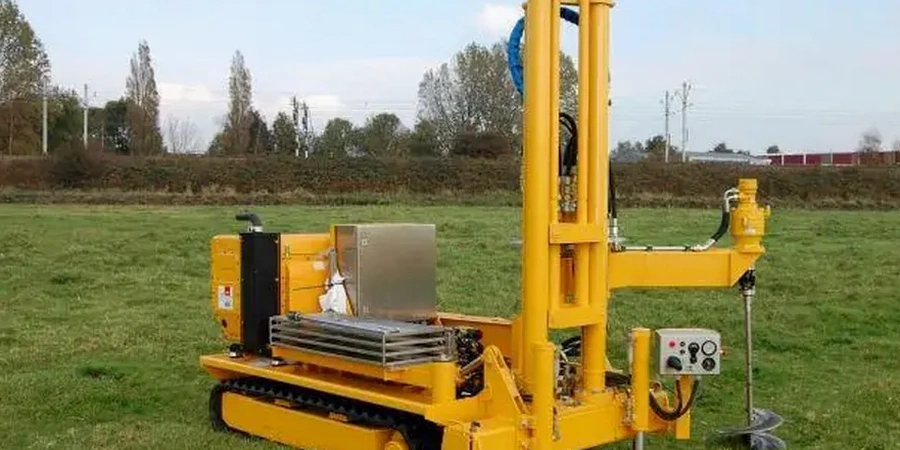
In Blenheim, geotechnical investigation is the critical first step for understanding ground conditions across the Wairau Plains and surrounding hill country. The region’s variable subsurface—from river gravels and alluvial silts to loess-covered slopes—demands thorough assessment under the New Zealand Building Code (clause B1) and NZGS guidelines. A targeted CPT test provides rapid, continuous profiling of soil strength and stratigraphy, which is essential for evaluating liquefaction potential in this seismically active area.
Whether planning a new vineyard facility, a residential subdivision on the plains, or commercial infrastructure, reliable data drives foundation design and earthworks planning. For sites with dense gravels or where direct sampling is required alongside cone penetration, integrating a complementary drilling service ensures a robust ground model. This depth of investigation directly informs efficient structural solutions and simplifies the consenting process with the Marlborough District Council.
NZS 3404:1997 Steel Structures Standard, NZS 4203:1992 General Structural Design and Design Loadings, NZGS Guideline for Anchor Design and Load Testing, 2015, BS 8081:2015 Code of Practice for Grouted Anchors
Active anchors are prestressed after installation. A hydraulic jack applies the design load, then the anchor head is locked off against the structure. Passive anchors are not prestressed. They develop resistance only when the ground moves and loads the tendon. Active anchors are preferred for permanent structures where deformation must be minimised. Passive anchors work well for temporary excavations in competent material.
The fixed length must be embedded in dense, competent gravel. In Blenheim, this typically means drilling through 3 to 5 metres of loose surface alluvium and founding the bond zone in gravels with N-values above 25. Total drilled lengths commonly range from 12 to 22 metres, depending on the cut height and the depth to competent strata.
Every anchor undergoes proof testing to 1.5 times the working load. Creep must stabilise at less than 2 mm over a 10-minute hold period. A sacrificial anchor is tested to failure on each site to verify the design bond strength. All testing follows the NZGS Anchor Guideline procedures, with load cells and digital displacement transducers recording the data.
This service complements our laboratory testing work for a complete project analysis.