GEOTECHNICAL ENGINEERING1
BLENHEIM
HomeSlopes & WallsSlope stability analysis

Slope Stability Analysis for Blenheim Developments

Knowledgeable. Thorough. Resourceful.

LEARN MORE

Blenheim's terrain throws a few curveballs at anyone breaking ground here. You have the flat, gravel-rich Wairau Plains giving way to the steep loess-covered hills of the Wither Range, and that transition zone is where we see most slope issues emerge. A proper slope stability analysis isn't just a box-ticking exercise for resource consent; it identifies the failure mechanism before it finds you. Our work combines site-specific geotechnical investigation with the analytical methods the Marlborough District Council expects to see. For projects near the Taylor River or where excavations cut into the Renwick loess, we often bring in CPT testing data to profile the colluvium before running limit equilibrium models, because guessing the strata here costs more than measuring it.

A stable slope in Blenheim is about understanding when the loess will saturate—not if.
Our service areas

How we work

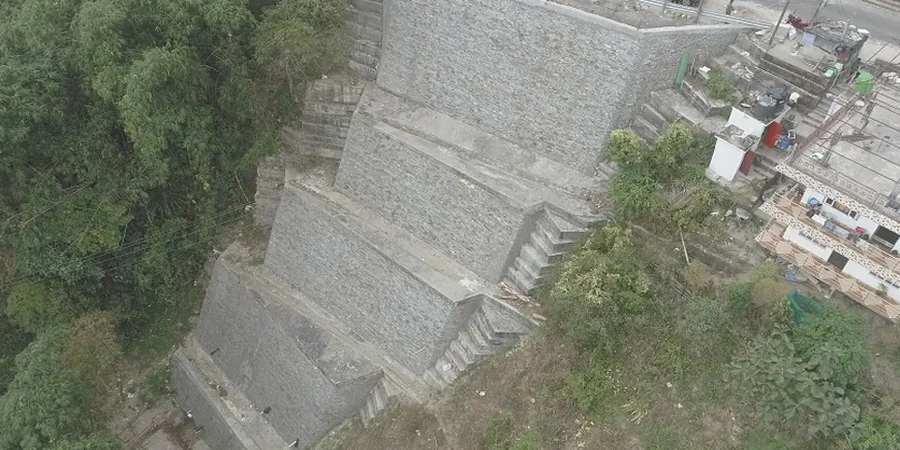
The contrast between a Springlands subdivision and a hillside section in Wither Hills couldn't be starker. Down on the plains, stability concerns usually tie back to groundwater and excavation geometry—get the dewatering wrong and even a shallow cut can unravel. Up in the hills, you're dealing with loessial soils that stand near-vertical when dry but lose all cohesion when saturated. Our analysis workflow accounts for both drained and undrained conditions, factoring in the seismic demands of NZS 1170.5. We model pore pressure buildup, tension cracks, and the influence of nearby structures. For cuts deeper than four metres, we frequently pair the slope model with a retaining wall design assessment to see if a structural solution makes more commercial sense than a flatter batter, and we verify soil parameters through in-situ permeability tests to understand how water moves through the slope after heavy Marlborough rainfall.
Slope Stability Analysis for Blenheim Developments
Technical reference — Blenheim

Local considerations

The 2016 Kaikōura earthquake, felt strongly here, reshaped how we think about slope risk in Marlborough. Blenheim sits in a seismically active region, and the combination of loessial hill soils with a design PGA that isn't negligible means you cannot afford to ignore earthquake-induced landslide hazard. A slope that looks perfectly stable in dry, static conditions can undergo rapid strength loss during shaking. We run pseudo-static analyses using horizontal coefficients calibrated to the site's seismic hazard, and for critical slopes, we evaluate the potential for liquefaction of any interbedded silts. Skipping this step invites a remediation bill that dwarfs the original earthworks cost. Council will also query your stability assessment if the site is within the Hill Country Erosion Area identified in the Marlborough Environment Plan.

Need a geotechnical assessment?

Reply within 24h.

Email: contact@geotechnical-engineering1.co

Applicable standards

NZS 3404: Steel Structures (for retaining elements), NZS 1170.5: Earthquake actions, NZGS Soil and Rock Slope Management Guidelines, NZS 4402: Methods of soil testing

Technical data

ParameterTypical value
Analysis MethodLimit Equilibrium (Bishop, Spencer, Morgenstern-Price) and FE where required
Design StandardNZS 3404, NZS 1170.5, NZGS Soil & Rock Slope Guidelines
Seismic CoefficientDerived from site-specific seismic hazard per NZS 1170.5
Soil ParametersDerived from CPT, SPT, lab triaxial and direct shear testing
Groundwater ModelSteady-state and transient seepage analysis (SEEP/W)
Factor of Safety (Static)Minimum FoS 1.5 for long-term, 1.3 for temporary works
Factor of Safety (Seismic)Minimum FoS 1.0–1.1 pseudo-static per NZGS recommendations

Quick answers

What does a slope stability analysis for a Blenheim building consent typically cost?
Does the Marlborough District Council require a specific factor of safety?

The Council generally defers to the NZGS guidelines, which recommend a minimum static factor of safety of 1.5 for permanent slopes. For seismic conditions, they will expect to see a pseudo-static analysis with a factor of safety not less than 1.0, and a defensible assessment of post-earthquake deformation.

How do you account for the loess soils common in the Wither Hills?

Loess behaves very differently when wet. We take undisturbed samples for triaxial testing to measure the saturated strength parameters, and we model the development of a perched water table during prolonged rain. The analysis explicitly checks for the loss of matric suction that gives dry loess its apparent strength.

Can a slope stability report be combined with a foundation bearing capacity assessment?

Yes, and it often makes commercial sense to do so. The same CPT or borehole data that feeds the slope model also provides the parameters for bearing capacity and settlement calculations. Combining them into one geotechnical report streamlines the consent process and avoids duplication of mobilisation costs.

Location and service area

We serve projects across Blenheim and surrounding areas.

View larger map