GEOTECHNICAL ENGINEERING1
BLENHEIM
HomeFoundationsPile foundation design

Pile Foundation Design in Blenheim: Deep Foundations for Marlborough Soils

Knowledgeable. Thorough. Resourceful.

LEARN MORE

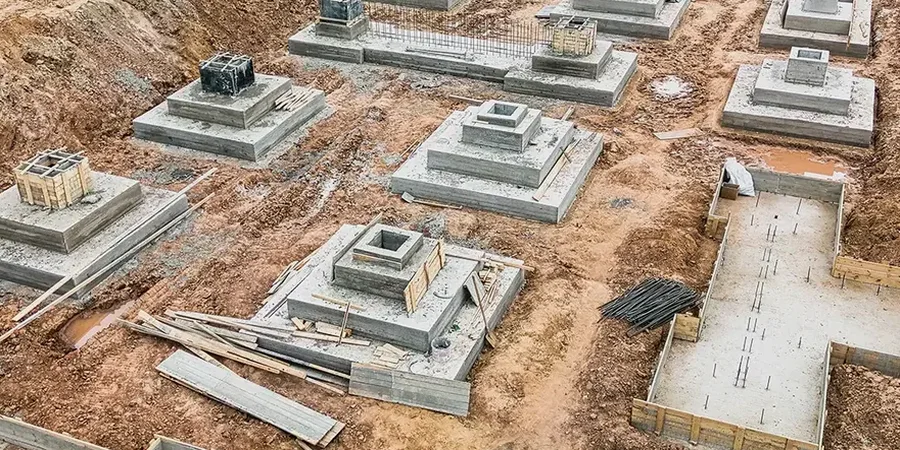
Blenheim sits on a complex mix of Wairau Plains alluvium. The groundwater table is often shallow -- within 2 meters in many areas near the river. This creates real challenges for standard shallow footings. Liquefaction susceptibility in the sandy silts demands a deep foundation strategy that bypasses the problematic upper strata. Our pile foundation design work focuses on transferring structural loads to the competent gravel layers or Tertiary bedrock below. We do not just apply a generic formula. We interpret site-specific CPT data and SPT blow counts to model lateral capacity and skin friction along the pile shaft. For projects near the Taylor River or in the Springlands area, understanding scour depth becomes critical to the final pile cap elevation and overall foundation robustness.

A pile design is only as reliable as the geotechnical model beneath it. On the Wairau Plains, that model must account for liquefaction and shallow groundwater.
Our service areas

Methodology and scope

Soil behavior varies across the Blenheim township. Compare a site in Mayfield, often underlain by loose recent sediments, with a project up on the slightly higher terraces near Witherlea where denser gravels appear sooner. The pile design must reflect this contrast. A driven pile in dense gravel achieves capacity through end-bearing, while in the softer silts, a bored pile relies more on shaft adhesion. We model these mechanisms using finite element software calibrated with site investigation data. The CPT test provides a continuous profile of tip resistance and sleeve friction, essential for estimating pile unit resistance without the disturbance of sampling. For liquefiable layers, the liquefaction analysis quantifies the loss of lateral support and the potential for downdrag, a factor often overlooked in basic designs. Our methodology integrates NZGS guidelines with the structural demands of NZS 3404.
Pile Foundation Design in Blenheim: Deep Foundations for Marlborough Soils
Technical reference — Blenheim

Local considerations

The Wairau Fault runs close to Blenheim. This proximity means the city faces a high seismic hazard. Liquefaction of the saturated alluvial silts and fine sands below the groundwater table is the dominant geotechnical risk. During a strong earthquake, lateral spreading can impose significant bending moments on piles, particularly near free faces like riverbanks. Ignoring this can lead to pile head failure. We design for these kinematic soil-structure interaction effects. Another risk is negative skin friction if the surrounding soil settles more than the pile itself. Our designs incorporate bitumen coatings or oversized sleeves in the settling zone to mitigate downdrag. The interface between the loose alluvium and the dense bearing layer creates an impedance contrast that affects pile driving dynamics and structural integrity.

Need a geotechnical assessment?

Reply within 24h.

Email: contact@geotechnical-engineering1.co

Applicable standards

NZS 3404:1997 (including Amendments 1 and 2), NZS 4203:1992 (General Structural Design and Design Loadings for Buildings), NZGS Guideline for Earthquake Geotechnical Engineering (Module 5: Ground Improvement and Deep Foundations), NZS 4402/D1143M-20 (Standard Test Methods for Deep Foundations Under Static Axial Compressive Load)

Technical parameters

ParameterTypical value
Design StandardNZS 3404, NZS 4203, NZGS Guidelines
Typical Pile TypesDriven steel H-piles, continuous flight auger (CFA), bored cast-in-place
Target Stratum in BlenheimDense alluvial gravels or Tertiary Marine sediments
Key Design InputCPT tip resistance, SPT N-values, Atterberg limits
Liquefaction AssessmentSeed & Idriss (1971), Idriss & Boulanger (2008) based on SPT/CPT data
Typical Pile Diameter Range300mm to 900mm for cast-in-place, 250mm to 350mm for driven H-piles
Design Life Requirement50 years for building structures per NZS 4203

Frequently asked questions

What depth of pile is typically required for a residential project in Blenheim?

It depends entirely on the depth to competent bearing material at your specific site. In some parts of Blenheim, dense gravels appear at 4 to 6 meters. Closer to the Wairau River or in areas with deeper alluvial deposits, piles may need to extend 12 to 18 meters to reach suitable material or to bypass the liquefiable zone. A CPT test provides the precise depth profile needed for this decision.

How do you account for the high groundwater table in pile design?

The shallow groundwater in Blenheim affects both design and construction. For design, it means the soil below the water table is considered fully saturated, which influences liquefaction susceptibility and reduces effective stress. For construction, it often requires temporary casing or drilling fluids to maintain borehole stability during the installation of bored cast-in-place piles. Our specifications include notes for the contractor regarding groundwater management.

What is a typical budget range for a pile foundation design package?

A complete pile foundation design package for a standard single residential dwelling in Blenheim typically ranges from NZ$2,530 to NZ$10,290, depending on the complexity of the ground conditions and the number of piles. This covers the geotechnical interpretation, the structural pile design, and the production of construction-ready drawings and specifications.

Can existing buildings in Blenheim be retrofitted with piles?

Yes, underpinning with piles is a viable solution for structures affected by settlement or for seismic upgrades. The process involves installing piles adjacent to or through the existing footing. Micropiles or small-diameter bored piles are often used in these access-constrained situations. We design the pile-to-footing connection to transfer the load safely from the existing structure to the new deep foundation system.

Location and service area

We serve projects across Blenheim and surrounding areas. More info.

View larger map