GEOTECHNICAL ENGINEERING1
BLENHEIM
HomeSlopes & WallsActive/passive anchor design

Active and Passive Anchor Systems in Blenheim

Knowledgeable. Thorough. Resourceful.

LEARN MORE

Blenheim sits on the Wairau Plains, a broad alluvial basin between the Richmond and Wither Hills. The town grew around the confluence of the Wairau and Opawa rivers, which means the near-surface geology across much of the urban area is dominated by fluvial gravels, silts, and loose sands. For any excavation deeper than three metres, these uncemented deposits create immediate lateral earth pressure challenges. Groundwater is typically high, especially south of the Taylor River. Anchor design here cannot rely on rule-of-thumb values from Auckland basalts or Wellington greywacke. We ground every anchor bond length calculation in site-specific CPT test data and NZGS guideline friction ratios. When retaining heights exceed four metres, we also integrate slope stability back-analysis to ensure the global failure surface does not pass behind the anchor fixed zone.

In Blenheim's fluvial gravels, anchor bond stress rarely exceeds 300 kPa without site-specific pull-out testing. Generic values from hard rock sites do not transfer to the Wairau Plains.
Our service areas

Methodology and scope

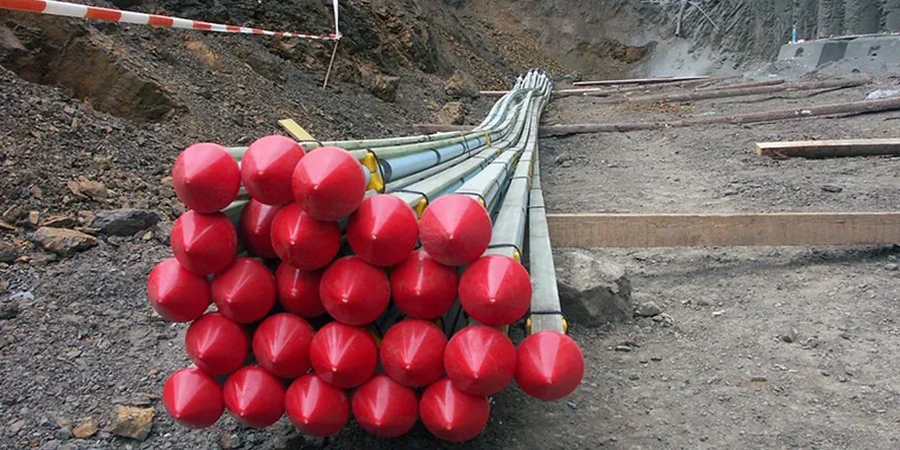
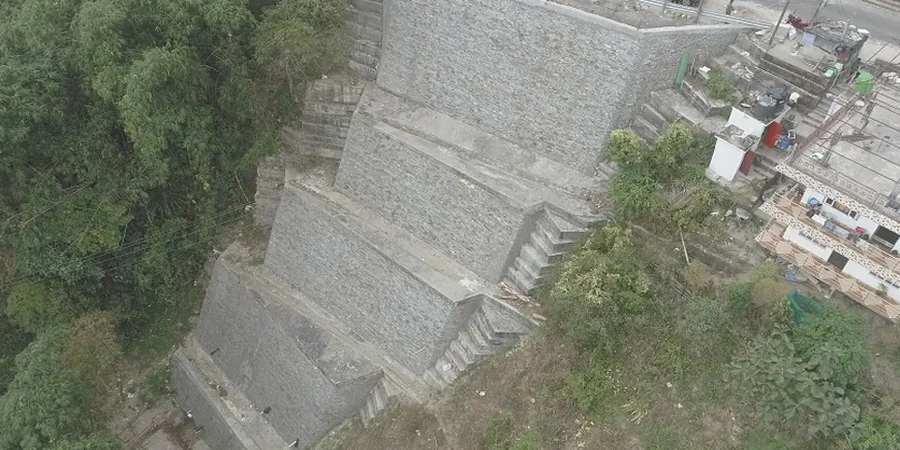
A recent commercial project on Main Street required a 5.5-metre cut directly adjacent to an existing two-storey masonry building. The excavation exposed loose gravelly sand with cobbles at depth. We designed a single row of active strand anchors at 2.5-metre horizontal spacing, each proof-tested to 1.5 times the design lock-off load per NZS 3404. The unbonded length extended past the Rankine failure wedge, while the bond zone sat firmly within the denser, older alluvium identified by SPT-N values exceeding 35. Passive anchors were specified for the corner where proximity to the boundary left no room for a waling beam. Key design aspects we manage on every Blenheim project include:
  • Bond length verification using in-situ SPT drilling logs and gravel content assessment
  • Tendon corrosion protection class determined from groundwater pH and resistivity testing
  • Lock-off procedure sequencing to limit wall deflection under 15 mm
  • Long-term load monitoring for permanent anchors in public right-of-way
Active and Passive Anchor Systems in Blenheim
Technical reference — Blenheim

Local considerations

Blenheim's seismic setting changes the anchor design brief considerably. The Wairau Fault runs just north of town, and the Alpine Fault rupture scenario generates long-period shaking amplified by the deep alluvial basin. A passive anchor that performs perfectly under static conditions can lose bond capacity during cyclic loading if the grout-ground interface degrades. We account for this by applying the NZS 1170.5 site subsoil class amplification factors and checking anchor loads under the seismic earth pressure increment. Liquefaction-induced lateral spreading is another concern near the Opawa River. Here we extend the unbonded length past the estimated lateral spread displacement zone and use ductile Grade 500E Macalloy bars for passive elements to absorb deformation without brittle fracture. Post-cyclic relaxation is estimated and added to the lock-off target. The high winter groundwater also demands careful grout mix design; we use anti-washout admixtures when placing anchors below the water table to prevent cement loss into the gravels.

Need a geotechnical assessment?

Reply within 24h.

Email: contact@geotechnical-engineering1.co

Applicable standards

NZS 3404:1997 – Steel Structures (anchor tendon and head assembly design), NZS 4203:1992 – General Structural Design (earthquake and earth pressure provisions), NZGS Anchor Guidelines (2017) – Ground anchor design, testing, and monitoring, NZS 1170.5:2004 – Seismic Actions (site subsoil class and spectra for Blenheim)

Technical parameters

ParameterTypical value
Design standardNZS 3404:1997, NZS 4203:1992, NZGS Anchor Guidelines
Anchor typeActive (pre-stressed strand tendons) and passive (fully grouted Grade 500E bars)
Typical bond length in gravels4.0 m to 7.5 m (site-dependent pull-out test confirmation)
Proof load (active anchors)1.50 × design lock-off load (NZS 3404 Section 9)
Corrosion protectionDouble-corrosion protection (DCP) for permanent anchors, single for temporary
Minimum unbonded length≥ 4.5 m or behind critical failure surface per NZGS tension zone analysis

Frequently asked questions

What is the difference between active and passive ground anchors?

Active anchors are pre-stressed after installation and locked off at a design load, actively compressing the retained ground or structure. Passive anchors are not pre-stressed; they mobilise resistance only as the ground deforms and load transfers into the tendon. Active systems suit displacement-sensitive structures, while passive systems work well for soil nailing and reinforcement where some deformation is acceptable.

How deep do anchors need to be in Blenheim's gravels?

Total anchor length typically runs between 9 and 18 metres, depending on the retained height and the depth to competent bearing stratum. The bond length alone generally measures 4 to 7.5 metres in dense alluvial gravels, but this must be confirmed by on-site pull-out testing. The unbonded length must extend past the theoretical failure wedge, usually 4.5 metres minimum for a 5-metre cut.

Are permanent anchors subject to different requirements than temporary ones?

Yes. Permanent anchors require double-corrosion protection (DCP) with a corrugated sheath and factory-injected grease or resin over the full unbonded length, plus a grout cover of at least 20 mm in the bond zone. The anchor head must be encapsulated and accessible for periodic re-stressing and lift-off checks. Temporary anchors used during construction only need single-layer protection, as their service life is under 24 months.

What does anchor design and testing cost for a typical Blenheim project?

For a typical retaining wall project in Blenheim requiring anchor design, specification, and on-site proof testing supervision, costs range from approximately NZ$1,910 to NZ$6,370. The final figure depends on the number of anchor rows, whether permanent or temporary corrosion protection is required, and the number of sacrificial pull-out tests needed to calibrate the bond stress for the specific gravel stratum on site.

Location and service area

We serve projects across Blenheim and surrounding areas.

View larger map