GEOTECHNICAL ENGINEERING1
BLENHEIM
HomeUnderground ExcavationsGeotechnical design of deep excavations

Geotechnical Design of Deep Excavations in Blenheim

Knowledgeable. Thorough. Resourceful.

LEARN MORE

Blenheim sits on the deep alluvial gravels of the Wairau Plain, where groundwater often appears less than two metres below the surface. The Wairau Aquifer feeds these coarse, permeable deposits, making dewatering a central challenge for any cut deeper than a single basement level. Our design work begins with a clear picture of the soil profile, and we frequently run CPT tests to map the gravel-to-silt transitions before selecting a shoring strategy, and in-situ permeability testing to size the dewatering system accurately.

On the Wairau Plain, controlling groundwater is the single biggest factor in keeping a deep excavation stable and on programme.
Our service areas

Methodology and scope

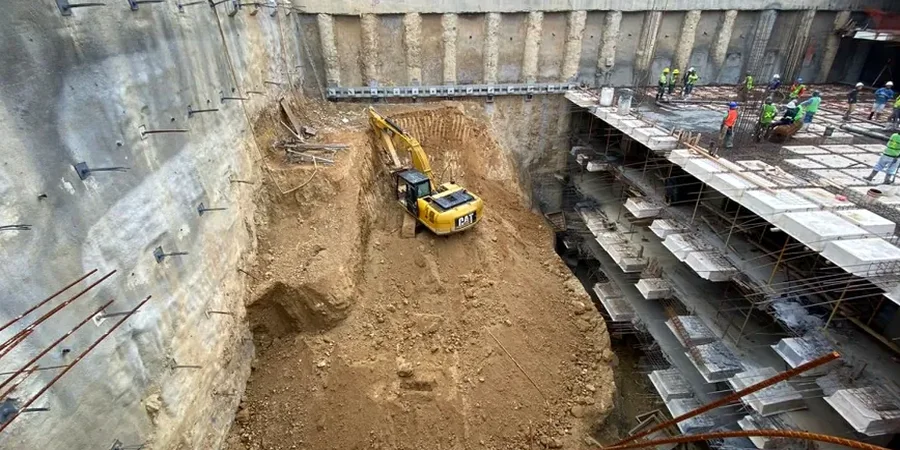
Blenheim’s population has climbed past 30,000, pushing new commercial buildings and parking basements into the CBD where excavation depths now reach six to eight metres. The combination of uncemented gravels, a high water table, and a seismic hazard factor of Z=0.30 under NZS 1170.5 means a simple soldier-pile-and-lagging wall is rarely sufficient without rigorous groundwater cutoff. Our team models staged excavation sequences in PLAXIS 2D, checking basal heave, piping, and wall deflection against the serviceability limits set out in the NZGS deep excavation guidelines. Where the gravels grade into silty lenses, we often recommend test pits at the early investigation stage to confirm stratigraphy before finalising the shoring layout.
Geotechnical Design of Deep Excavations in Blenheim
Technical reference — Blenheim

Local considerations

A four-storey office development on Queen Street recently illustrated what happens when groundwater is underestimated. The contractor hit flowing gravel at three metres, the unsealed sheet pile interlocks started piping fine sand, and the adjacent footpath settled 40 millimetres in one shift. We were called in to redesign the dewatering array and add a toe grout curtain. In Blenheim’s gravels, the risk is not just wall collapse; it is the rapid erosion of fines that undermines neighbouring shallow footings. Our designs now mandate real-time piezometer monitoring and trigger levels for groundwater drawdown, tied directly to the construction hold points.

Need a geotechnical assessment?

Reply within 24h.

Email: contact@geotechnical-engineering1.co

Applicable standards

NZS 1170.5:2004 – Structural design actions – Earthquake actions, NZS 4404:2010 – Land development and subdivision infrastructure, NZGS Deep Excavation Guidelines (2015), CIRIA C760: Guidance on embedded retaining wall design

Technical parameters

ParameterTypical value
Typical excavation depth (CBD)5–8 m below ground level
Design groundwater level1.5–2.5 m below surface
Predominant soil profileAlluvial gravels over silty sands
Seismic zone factor (Z)0.30 (NZS 1170.5)
Common shoring systemSheet pile or secant pile wall with tie-back anchors
Analysis methodFinite element (PLAXIS 2D/3D) with staged construction
Key stability checkBasal heave and hydraulic piping

Frequently asked questions

What groundwater challenges are specific to deep excavations in Blenheim?

The Wairau Aquifer keeps the water table high and the gravels highly permeable. Without a properly designed cutoff or dewatering system, inflow can exceed 20 litres per second in a modest basement. We design for both volume and the risk of piping fine material through open joints in sheet piles.

How much does a deep excavation design for a Blenheim site typically cost?

Fees for a full design package — covering ground investigation specification, shoring analysis, dewatering design, and construction monitoring — generally range from NZ$3,080 to NZ$12,110 depending on excavation depth, number of retained sides, and the complexity of the groundwater model.

Do we need a peer review for the excavation design under Marlborough District Council?

For excavations deeper than 3 metres adjacent to public roads or neighbouring buildings, Council often requires an independent peer review. We coordinate the review process and can recommend experienced local reviewers.

Which shoring system works best in the Wairau gravels?

In most Blenheim CBD sites, a sheet pile wall with tie-back anchors performs well, provided the interlocks are sealed or a grout curtain is placed. Where vibration from pile driving is a concern near heritage buildings, we switch to a secant pile wall or a diaphragm wall.

How long does the design and consent phase usually take?

Allow four to six weeks from completion of the ground investigation to issue of the detailed design report. Consent processing by Marlborough District Council adds a further four to eight weeks, depending on the complexity of the groundwater discharge application.

Location and service area

We serve projects across Blenheim and surrounding areas.

View larger map